







By Marcus Grohmann, Director of the Alliance for Vulnerable Mission, Postdoctoral Researcher at the Department of Practical Theology and Missiology, Stellenbosch University, South Africa.
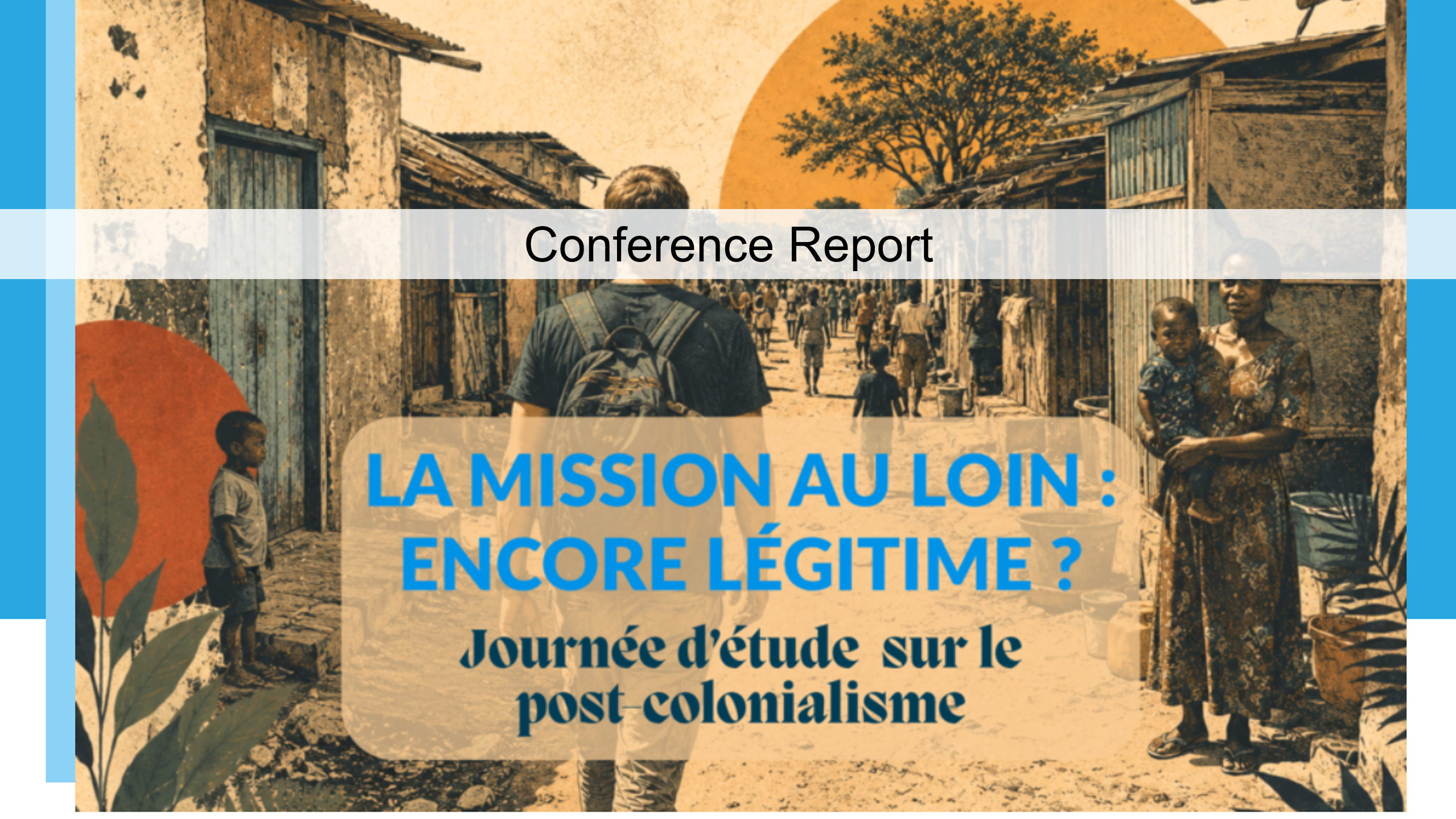
On 3 October, the Reformed seminary HET-PRO (formerly Institut Biblique et Missionnaire Emmaüs) in Saint-Légier in Switzerland together with REMEEF* gathered mission leaders, missiologists, students and missionaries for a conference with the central question: Is overseas mission (particularly by ‘Westerners’) still legitimate? This question was already loaded with assumptions and presuppositions – but the provocation was intended.
*Réseau de missiologie évangélique pour l’Europe francophone – the Network of evangelical missiology for francophone Europe
The attempt to encourage conversations on postcolonialism within the French-speaking missiological community began by clarifying central terms – colonialism, imperialism, coloniality, subaltern, epistemicide, decolonisation, as well as the concept of intercultural theology. It was followed by an appreciation of the fact that the gospels (and particularly the gospel of Luke) were written from within the experience of colonialism – and that God is portrayed as the one who uplifts the marginalised and saves His people.
The next presentation pointed out the complexity of the colonial experience of mission while sharing about the psychological consequences from a Malagasy perspective. It also mentioned the restorative role of the Bible in the Malagasy language in this process.
The following two talks underlined the need for mutuality in mission today and for a willingness on the side of those with greater power to come in humility, to learn, to receive and to be transformed by the relationship with the ‘other’.
Further presentations considered the tension of biblical truth and cultural contextualisation, secular perspectives on the postcolonial situation as well as our responsibility in taking into account history in all its complexity, Christianity’s complicity in colonialism, and the fundamental call to be witnesses to the inbreaking kingdom of God in this world.
In conclusion, the conference with its evangelical speakers from a great variety of national and cultural backgrounds, affirmed the ongoing involvement in mission by those who are regarded as part of former colonial powers – but not unconditionally. The key question on which there seemed to be unanimity was, “How are Westerners involved in global mission today?” This concerned their modes of mission and their attitude towards those receiving them. But it also concerned their attitudes towards those Christians or missionaries (from the global South) who are received by them and their countries.
From an AVM perspective there is firstly reason for joy to see that debates that we know primarily from the English- and German-speaking world are had within French-speaking communities as well. Secondly, it was apparent that many important questions were being asked but that practical challenges around the use of local/outside languages and resources were not (yet) treated in depth. Apart from the general expediency of seeking collaboration across the different linguistic constituencies, this could be a place for the AVM to contribute in the future.